
Scarlet fever
Infectious disease caused by Group A streptococcus, with characteristic rash.

Wikimedia Commons · CC BY 4.0
Scarlet fever, also known as scarlatina and scarlatiniform rash, is an infectious disease caused by Streptococcus pyogenes, a Group A streptococcus (GAS). It most commonly affects children and young adolescents between five and 15 years of age. The disease was a leading cause of death in children in the early 20th century, though its severity declined before the introduction of antibiotics, possibly due to better living conditions, control measures, or a decline in bacterial virulence.
- cause
- Streptococcus pyogenes (Group A streptococcus)
- affected_age_group
- Children and young adolescents 5–15 years
- key_symptoms
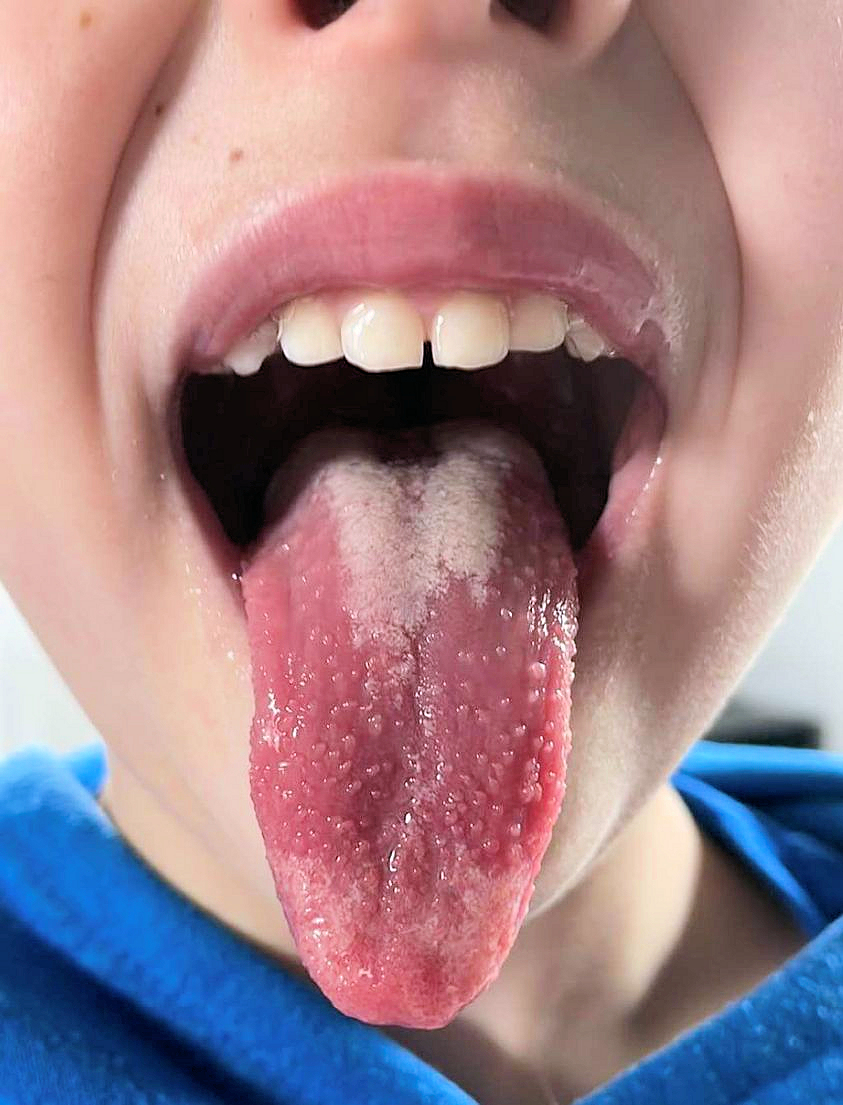
- Sore throat, fever, headache, sandpaper-like rash, strawberry tongue
- transmission
- Coughing, sneezing, or touching contaminated objects
- treatment
- Antibiotics
- vaccine_availability
- None
- notable_outbreaks
- Hong Kong 2011, UK 2014, UK 68% rise 2014–2018
Lore & Background
Scarlet fever typically presents with sudden sore throat, fever, and malaise, followed by a widespread rash that feels like sandpaper. The rash appears one to two days after illness onset, often starting on the neck or torso before spreading. The tongue may develop a white coating with red papillae (white strawberry tongue), which later sheds to become red strawberry tongue. On darker-pigmented skin, the rash may be hard to discern, though the skin feels rough. The rash results from capillary damage by exotoxins produced by S. pyogenes.
Reader's Guide
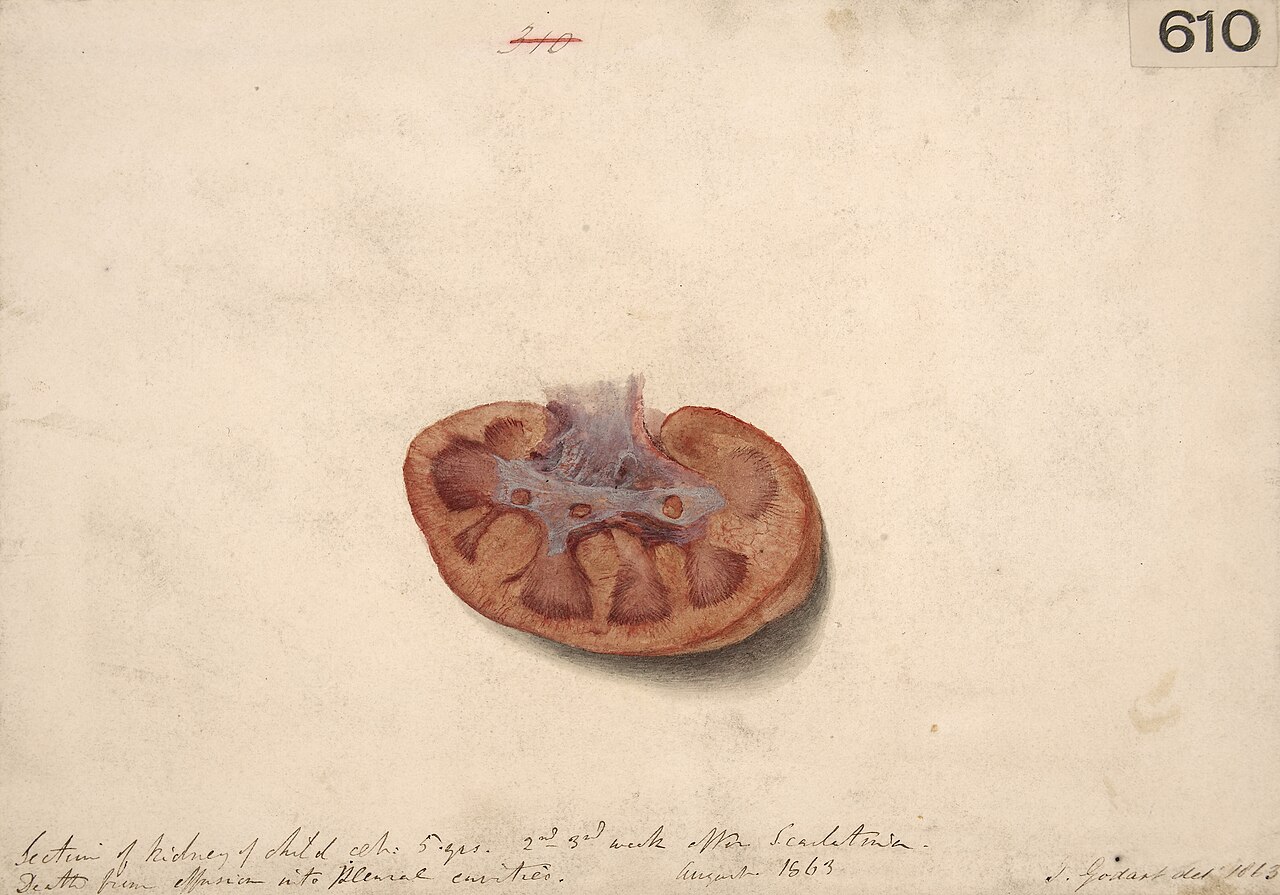
Scarlet fever develops in a small number of people with strep throat or streptococcal skin infections. Diagnosis is typically confirmed by throat culture. There is no vaccine; prevention relies on handwashing, not sharing personal items, and avoiding others when sick. Antibiotics reduce symptoms, spread, and most complications. Long-term complications include kidney disease, rheumatic fever, and arthritis. In the early 20th century, it was a leading cause of child death, but severity declined before antibiotics.
Did You Know?
- The rash typically feels like sandpaper and may be hard to discern on darker-pigmented skin.
- Scarlet fever can lead to long-term complications such as kidney disease, rheumatic fever, and arthritis.
- There is no vaccine for scarlet fever; prevention includes frequent handwashing and not sharing personal items.
The Signature Presentation
Scarlet fever announces itself with a sudden wave of sore throat, fever, and general malaise, often accompanied by headache, nausea, or abdominal discomfort. The illness typically follows a Group A streptococcal throat infection, and the hallmark rash generally emerges one to two days after the first symptoms, though it can appear anywhere from before the fever to as late as seven days into the illness. The rash itself is a diffuse redness studded with tiny goose-bump-like elevations, beginning on the neck or torso and spreading outward to the limbs. It has an unmistakably rough, sandpaper-like texture, and the cheeks take on a flushed appearance with a pale ring around the mouth. The tongue undergoes a dramatic transformation: in the first two days a white coating covers swollen red papillae, creating what clinicians call a "white strawberry tongue," which later sheds to reveal a "red strawberry tongue." Importantly, the rash spares the palms and soles, blanches under pressure, and on darker-pigmented skin the bumps tend to be larger while the overall redness is harder to spot. Children under five, and especially those under three, may present atypically with nasal congestion, low-grade fever, irritability, or poor appetite rather than the classic picture.
A Bacterial Story: Cause and Transmission
Scarlet fever is not a standalone pathogen but rather a specific toxic reaction triggered by Streptococcus pyogenes, a member of the Group A streptococcal family. The disease develops in a small subset of individuals who contract a streptococcal throat or skin infection; the exotoxins the bacterium releases damage capillaries, producing the telltale rash. Transmission is straightforward and person-to-person: an infected individual coughs or sneezes, sending droplets into the air, or the bacteria linger on surfaces and are picked up when someone touches their mouth or nose. Because the organism is so common in everyday environments, the jump from a routine strep throat to full scarlet fever is relatively rare but not unheard of. Diagnosis relies on culturing a throat swab to confirm the presence of the bacteria. Notably, there is no vaccine available to prevent the disease, and symptoms such as cough, hoarseness, runny nose, or conjunctivitis are typically absent—those point more toward a viral illness rather than the streptococcal infection behind scarlet fever.
Treatment, Prevention, and the Shadow of Complications
Once confirmed, scarlet fever is manageable with a course of antibiotics that both ease symptoms and curb further spread, and when treated promptly the prognosis is generally favorable. In the absence of treatment, however, the infection can seed complications in two broad categories. Suppurative complications—though rare—arise when the bacteria spread directly to neighboring structures or travel through lymphatic channels and the bloodstream, potentially causing peritonsillar or retropharyngeal abscesses, cellulitis, mastoiditis, or sinusitis. Nonsuppurative complications are the more insidious long-term threats, including kidney disease, rheumatic fever, and arthritis. Because no vaccine exists, prevention rests on everyday hygiene: frequent handwashing, avoiding the sharing of personal items such as cups or towels, and staying home while symptomatic. The main rash typically fades within a week, sometimes followed by several weeks of peeling skin on the fingers and toes, a desquamation process that can begin on the face and travel downward, occasionally leaving the only trace that the illness ever occurred.
From Deadly Epidemic to Modern Resurgence
In the early twentieth century, scarlet fever ranked among the leading killers of children. Remarkably, its lethality was already waning well before World War II and the arrival of antibiotics; historians and epidemiologists attribute this earlier decline to improved living conditions, better public-health control measures, or a natural reduction in the virulence of circulating strains. Yet the disease has never fully disappeared. In 2011 an outbreak struck Hong Kong, and in 2014 a significant surge was recorded in the United Kingdom. Between 2014 and 2018, reported cases in the UK climbed by 68 percent, a trend that coincided with growing concerns about antibiotic resistance. A particularly striking finding emerged in October 2020: research demonstrated that when three distinct viruses infect the streptococcal bacterium, they can produce markedly more virulent strains, potentially explaining some of the recent upswings in severity and frequency. This reminder that a once-feared childhood disease can reassert itself underscores the importance of continued surveillance and vigilance.
Gallery




Frequently Asked Questions
What is Scarlet fever?
Scarlet fever is a bacterial infection triggered by Group A streptococcus (Streptococcus pyogenes) that produces a distinctive rash. It is also referred to as scarlatina or scarlatiniform rash.
Who does Scarlet fever typically target?
The condition predominantly strikes children and young adolescents in the five-to-fifteen age bracket. It was once a major killer in this demographic before modern medicine arrived.
What are Scarlet fever's hallmark signs?
Patients typically present with a sore throat, high fever, headache, a rough sandpaper-textured rash, and a red strawberry tongue. Together these symptoms distinguish it from other strep-related illnesses.
How does Scarlet fever spread?
The bacteria travel through respiratory droplets when an infected person coughs or sneezes, and can also be picked up by touching contaminated surfaces. No vaccine currently exists to prevent infection.
How is Scarlet fever treated?
A course of antibiotics is the standard and effective treatment for clearing the infection. Without antibiotic therapy, the untreated bacteria can lead to serious complications.
More in Diseases And Conditions 1-15
Spotted an error? Know more?
This is a living reference — every entry is fact-audited, and reader corrections feed straight into our audit queue. Suggest an edit · See this site's audit record